
SLA vs. KPI vs. OLA: what is the actual difference in customer support?
These three acronyms get used almost interchangeably in support teams, and mixing them up leads to targets that do not mean what people think they mean.
 The Samvaads teamFeb 20, 20262 min read
In this post
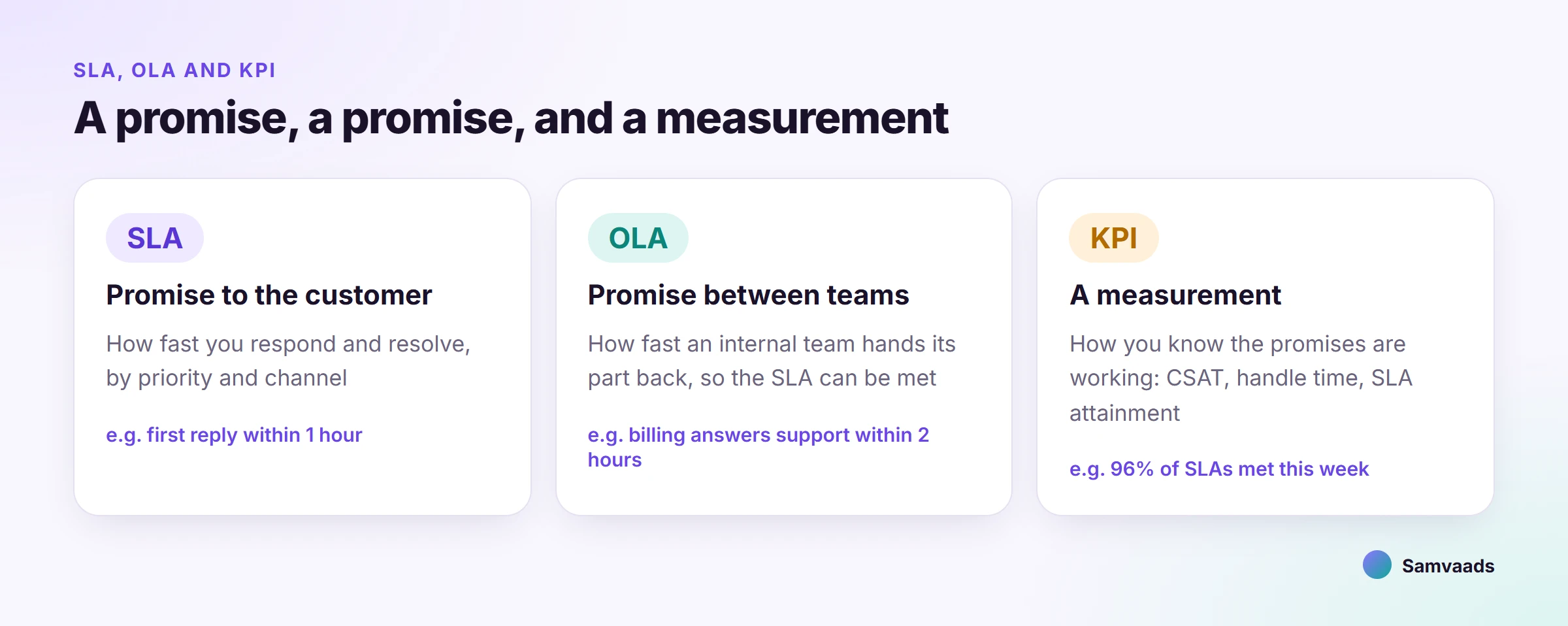
Sit in enough support planning meetings and you will hear "SLA," "KPI," and "OLA" used as if they were roughly the same thing — a number the team is supposed to hit. They are not the same thing, and the difference matters more once a support org has more than one team involved in resolving a ticket.
SLA: the promise to the customer
A service-level agreement (SLA) is the commitment your company makes to the person outside it — usually a first-response or resolution time target. It is external-facing by nature, even when the customer never sees the exact number: it is the standard you are holding yourself to on their behalf.
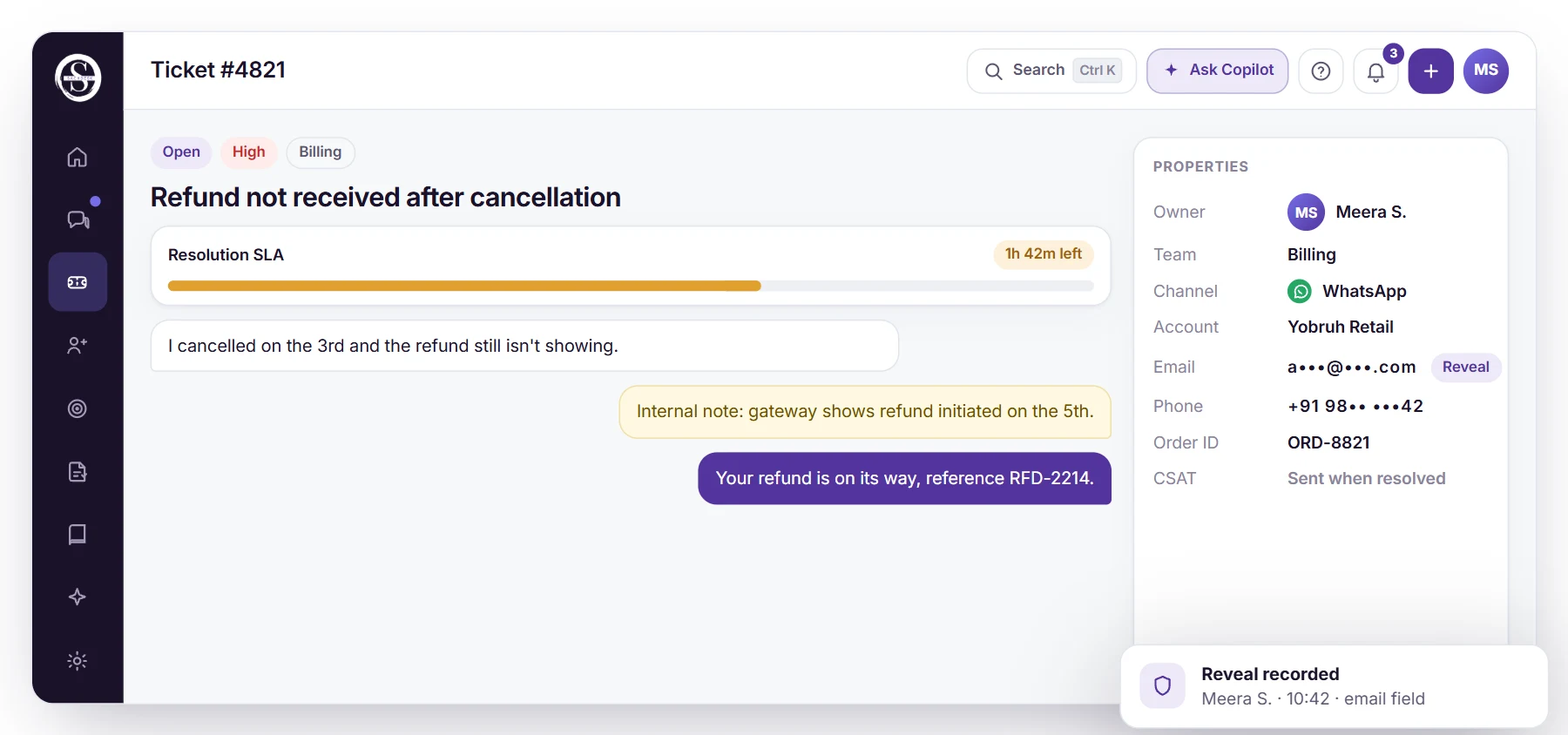
OLA: the promise between internal teams
An operational-level agreement (OLA) is the internal version of the same idea — the time the billing team commits to respond to a support agent's escalation, for instance, so the support agent can in turn hit the SLA they promised the customer. If a ticket depends on three internal handoffs, the SLA is only achievable if every OLA behind it is realistic and actually met.
KPI: how you know either one is working
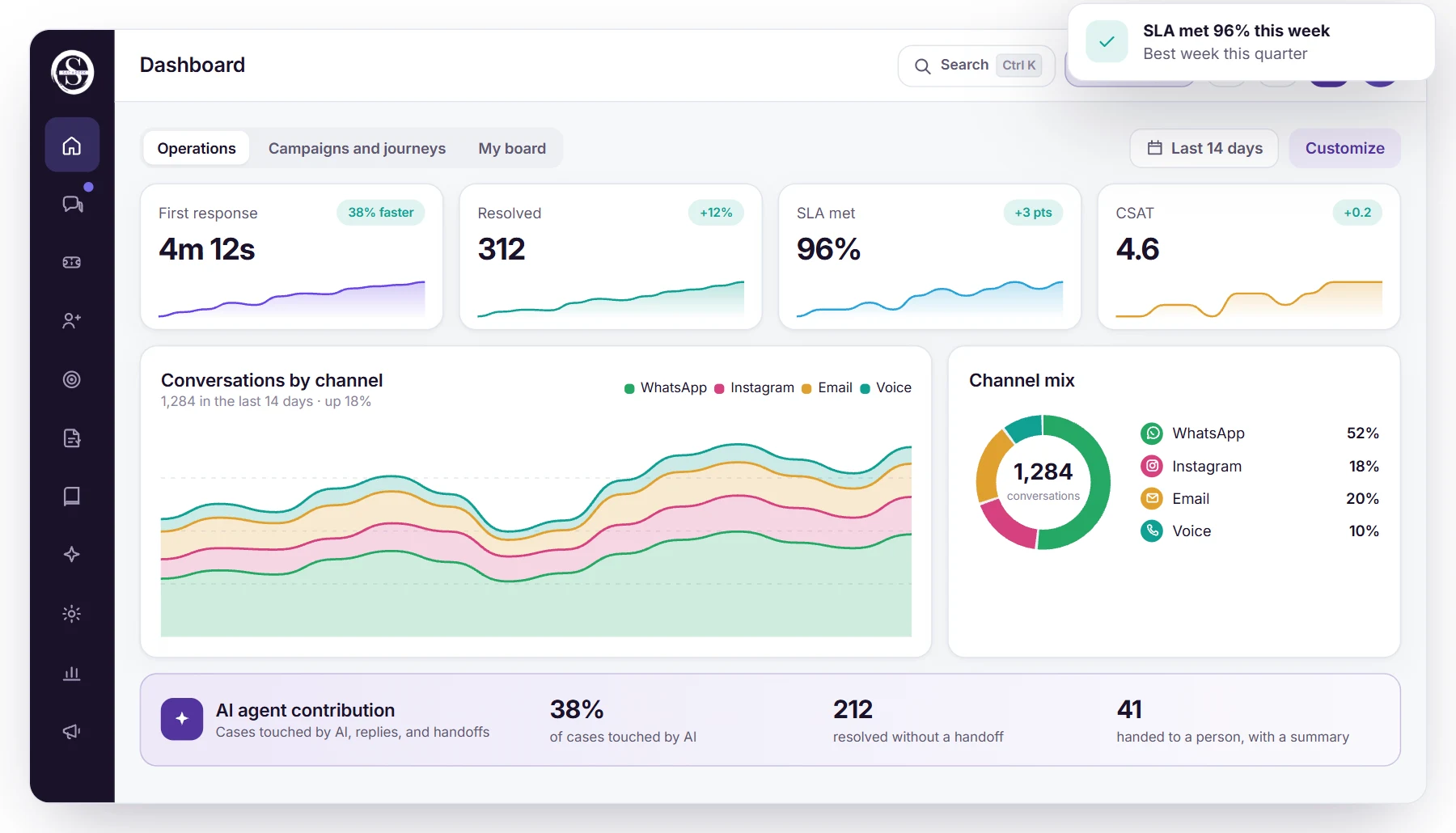
A key performance indicator is a measurement, not a promise — CSAT, average handle time, ticket volume per agent. KPIs tell you whether your SLAs and OLAs are sustainable or whether the team is hitting the target by cutting corners that will show up somewhere else, like a CSAT score quietly declining while resolution time looks great.
Why the distinction actually matters
Treating all three as interchangeable usually shows up as one specific failure: a customer-facing SLA that depends on an internal team with no OLA at all, so the promise to the customer rests on an assumption nobody actually agreed to. Naming the layers separately is what makes it possible to find that gap before a customer does.
Building this in practice
Our guide to building an SLA program that works goes deeper on setting realistic targets per channel and designing escalation that fires before a breach, not after.
See it running in Samvaads
Everything described here is a real, shipping part of the product, not a roadmap item.